
How to Buy a New Home Without Selling Your Current One (Real Story)
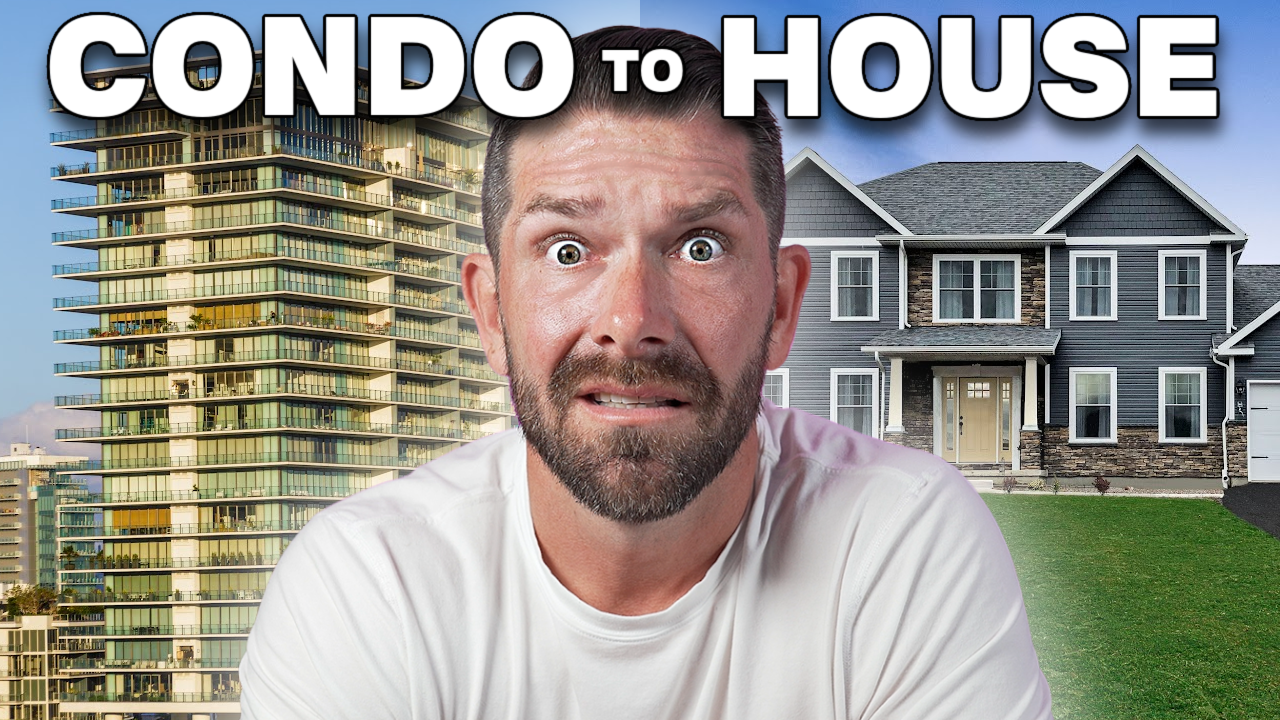
Most people assume that moving up means moving on. Sell the old place, use the equity as a down payment, and start fresh. But what if there was a smarter path? One that lets you keep your first home, convert it into a wealth-building rental, and still purchase the property your growing family needs?
That is exactly what Juan and his wife Soledad did. Over the course of five years, from a condo purchase during the height of COVID to a single-family home in early 2026, they executed a move-up strategy that most buyers never even consider possible. Their story is not just inspiring. It is a practical blueprint for anyone in Southern California looking to build real, lasting wealth through real estate.
Why This Story Matters for California Homebuyers
The Southern California housing market is one of the most challenging in the country. High prices, elevated interest rates, and limited inventory make the path to homeownership feel narrow. And once you are in a home, the idea of moving up, especially while holding onto the first property, can feel financially impossible.
But Juan and Soledad did not get here by accident. They got here through discipline, preparation, and a long-term mindset that most buyers never develop. Their journey offers a repeatable framework for financially responsible buyers who want more than just a place to live. They want a foundation for generational wealth.
The Backstory: Learning the Hard Way
Juan's relationship with real estate did not start on easy ground.
As a teenager, he watched his mother lose her home during the 2008 financial crisis. She had taken out a variable-rate loan, a product that was common and loosely regulated at the time. When her interest rate adjusted, her payment climbed to a level she could no longer afford. The family was foreclosed on. Within less than two years, they had to move twice, displaced first from their own home and then from a rental property where the landlord also lost the property.
That experience shaped everything about how Juan approached homeownership as an adult. He was not going to overstretch. He was not going to take on more payment than he could sustain. And he was absolutely not going to try to time the market.
"The prices available back in 2010, 2012. I know a lot of people are still waiting for that. That was a unicorn event. I don't know if that's ever going to happen again."
Juan, Educated Homebuyer ListenerHis early experience with financial instability became one of the most powerful assets he brought to his own home-buying journey. He understood viscerally what overstretching looks like from the inside, and he built his entire financial strategy around avoiding it.
The First Move: Buying During COVID With a Long-Term Plan
In 2021, Juan and Soledad entered one of the most competitive housing markets in California history. They put in over a dozen offers on single-family homes before finally landing on a one-bedroom condo. It was a compromise, but a deliberate one.
This is a critical distinction. They did not buy the condo because it was what they wanted long-term. They bought it because it was what they could access, and they immediately set a five-year horizon for it. From day one, the plan was clear: live in the condo, build equity, accumulate savings, and eventually move up.
The Long-Term Framing
Juan and Soledad set a five-year timeline for the condo from the moment they closed. They were not settling. They were executing step one of a multi-step strategy. That framing changes everything about how you make decisions along the way.
Five Years of Discipline: What Most Buyers Skip
The years between 2021 and 2026 were not passive. Juan and Soledad were actively preparing for what came next. Their approach included several behaviors that separated them from buyers who end up financially stuck.
- They kept their debt low throughout. While others were financing new cars and racking up credit card balances, Juan and Soledad were systematically reducing their obligations. They understood that when the time came to qualify for a second mortgage while carrying the condo, every dollar of existing debt would work against them.
- They saved aggressively without overreaching on lifestyle. The couple made a deliberate decision not to buy the biggest, nicest home they could qualify for, not in 2021 and not in 2026. "As long as you're comfortable and you have peace of mind, that's more important to me and my wife than having the biggest and nicest home," Juan said.
- They maintained full financial transparency with each other. Both partners were deeply involved in every financial decision. They held each other accountable, tracked their progress, and stayed aligned on the goal. The clarity between them removed friction that derails a lot of couples from long-term financial planning.
- They started the mortgage process early. Juan reached out in January, months before their target closing date in late March. It is never too early. A fifteen-minute conversation a year before a purchase can save enormous stress and prevent avoidable problems during the transaction.
The Strategic Decision: Keep the Condo, Buy the House
When the time came to move, Juan and Soledad faced the question every move-up buyer eventually confronts: sell the old property or hold it?
Selling would have been simpler. They had meaningful equity in the condo from four-plus years of appreciation and mortgage paydown. Cashing out that equity would have given them a larger down payment on the new home, a lower payment, and a less complex financial picture going forward.
But they looked carefully at what they would be giving up.
Their condo carried a COVID-era interest rate, one of the lowest rates available in a generation. Selling that property and extinguishing that loan would mean losing that rate forever. Holding it meant someone else would pay market rent every month, cover the mortgage, and generate positive cash flow on top of it.
"This real estate thing is not a one-year, two-year thing. This is a one decade, two decades thing. Eventually we will reap the benefits."
Juan, Educated Homebuyer ListenerFrom a financial strategy perspective, the math supported holding. The rental income more than covered the mortgage payment on the condo. And because a significant portion of that payment at five-plus years into the loan goes toward principal rather than interest, the tenant is effectively building equity for Juan and Soledad every single month while they live in their new home. That is That is the compounding power of real estate. It accumulates quietly over time.
Is This Strategy Right for Your Situation?
If you are trying to figure out whether holding your current home while buying a new one makes financial sense, the first step is getting clarity around your numbers and your options.
Start Here →The Mortgage Structure: What Move-Up Buyers in California Need to Know
Because Juan and Soledad were keeping the condo rather than selling it, several standard loan programs were off the table.
FHA loans include something called the 100-mile rule. If a borrower owns a home with an FHA loan and wants to buy a new primary residence, the existing rental income generally cannot be used to offset the departing property's payment unless the new home is at least 100 miles away. Juan and Soledad were moving within the same general area, so FHA was not a viable path.
Additionally, programs like Home Ready and Home Possible, which allow as little as three percent down, carry income limits. The couple had solid, steady jobs with good income, which disqualified them from those programs.
The result was a five percent down conventional loan. This was not a setback. It was the right loan for their situation given the constraints they were working within. And because they had spent years building up savings, the down payment was not a stretch.
The Car Loan Decision
Juan and Soledad had enough cash to pay off a small car loan with only a few months remaining on it. The question was whether to eliminate that debt before closing to reduce their mortgage payment. The answer, in their case, was no.
Paying off the car would have saved roughly $30 to $35 per month on their mortgage, a number spread across 30 years. The car itself would be paid off within a year anyway. Keeping the cash gave them liquidity and a financial cushion in the early months of holding two properties. Burning $5,000 to $6,000 of savings to save $35 per month was not a trade that made sense.
The Analytical Approach
These are the kinds of micro-decisions that most buyers make emotionally rather than analytically. The right mortgage advisor walks through each one, looks at the numbers, and helps you make the call that serves your long-term position, not the one that simply looks easiest on paper.
What Most Buyers Get Wrong About Move-Up Timing
There is a persistent belief in the California market that move-up buyers need to wait for the "right time," waiting for rates to come down, for prices to soften, for conditions to improve. Juan and Soledad's story challenges that thinking directly.
They did not buy in 2021 because the market was perfect. It was arguably one of the least rational moments to buy, with bidding wars driving prices well above asking and inventory at historic lows. They bought because they were financially ready, their family needed stability, and they had a plan that made the numbers work regardless of what happened to prices in year two or three.
The same principle applied in 2026. They did not buy the new home because rates were attractive. They bought because their family had outgrown the condo, they had prepared financially for this exact moment, and the payment on the new property was within a budget they could comfortably sustain. Waiting for perfect conditions in Southern California is a strategy that tends to cost buyers more than it saves them.
Buying from an Estate: What California Buyers Should Expect
One aspect of Juan and Soledad's transaction that will become increasingly relevant for Orange County and Southern California buyers is purchasing from an estate or heir. The seller in their case had inherited the property, had never lived in it, and had no firsthand knowledge of its condition or history.
In California, sellers are required to complete a Transfer Disclosure Statement covering dozens of questions about the property. When a seller has lived in a home, that document is full of valuable information. When the seller is an heir who has never been on the property, they are permitted to check "I don't know" across virtually every line. That disclosure gap puts more responsibility on the buyer.
- Commission a more thorough home inspection than you might otherwise. Do not rely on seller disclosures to catch problems.
- Ask more questions during due diligence. Absence of seller knowledge is not absence of issues.
- Understand that both agents' visual inspections are required but are not substitutes for a professional inspection.
- Budget for surprises. An estate seller simply cannot tell you what they do not know.
As the silver tsunami of aging Baby Boomers continues to generate estate sales across Orange County and the broader Southern California market, this type of transaction will become far more common. Buyers who understand what they are getting into will be better positioned to protect themselves.
How the Transaction Almost Stalled at the Finish Line
Even the smoothest transactions can hit unexpected obstacles, and Juan and Soledad's closing was no exception.
They had already rented out their condo to tenants who needed to move in on April 1st. Their purchase was scheduled to close on March 27th. That was a tight four-day window to close escrow, receive keys, and physically vacate the condo. And then LA County rejected the recording. Three times.
Recording is the final step in a California real estate transaction. When escrow has funded and all documents are in order, the deed of trust and grant deed get submitted to the county recorder to officially transfer ownership. LA County is known for being particular about what it will record. The title and escrow team believed nothing was incorrect, kept resubmitting, and eventually on the third day, the county recorded on the fourth attempt with no changes having been made.
What got Juan and Soledad through it was staying calm, communicating clearly with the professionals on their team, and trusting the process. Their mortgage broker, their realtor, and escrow worked together to arrange temporary occupancy of the new property ahead of formal recording, allowing them to begin moving in while the county worked through its process.
"When things get a little tight or aren't making sense, reach out to your pros. Say, I don't understand. Help me understand what's going on."
Josh Lewis, Certified Mortgage ConsultantBuilding a Real Estate Team You Can Trust
Juan's relationship with the Educated Homebuyer podcast goes back three years before his 2026 purchase. He spent that time learning, absorbing the educational content, understanding the process, building up his own knowledge so that when the moment came, he was not starting from zero. Conversations that take a full hour with a first-time buyer new to the process took ten or fifteen minutes with Juan. Not because the information was less important, but because he had already done the foundational work.
For his realtor, he worked with his sister-in-law, someone he had trusted with his first transaction in 2021 and whose career he had watched develop over four years. She handled a difficult situation late in the transaction and performed well under pressure.
The through-line in all of it: Juan built a team intentionally, over time, based on demonstrated competence and trust. He made deliberate choices, and the results reflected that. If you do not have a trusted agent in your area, connecting with an experienced local professional is always the right first step.
What Juan Would Tell His 2021 Self
When asked what advice he would give to his younger self just beginning the home buying journey, Juan's answer was simple and worth holding onto.
"Stay disciplined and patient. The only thing that is constant in life is change. Be ready to pivot. Things that are difficult in life are the things that are worth it the most."
Juan, Educated Homebuyer ListenerFive years from a condo with a COVID-era rate to a single-family home with a cash-flowing rental property behind it. That is not luck. That is an educated homebuyer executing a plan.
The Strategic Recap: Is This Path Right for You?
The move Juan and Soledad executed was the right move for their situation. But it is not the right move for everyone, and it is important to understand the conditions that made it work.
- It works when you have enough cash to cover the down payment without draining your reserves. If buying the second property means stripping your savings to zero, you are taking on unnecessary risk as a landlord. Liquidity is not optional.
- It works when the rental income comfortably covers the departing property's mortgage and carrying costs. Positive cash flow is not just a bonus. It is what makes the strategy sustainable long-term.
- It works when you have a long time horizon and the emotional discipline to stay the course. Real estate does not reward impatience. The compounding that makes this strategy powerful requires years and decades to fully materialize.
If you are a buyer or current homeowner in Southern California exploring whether a strategy like this could work for your family, the most valuable thing you can do right now is have a real conversation with the right advisor, someone who will look at your full financial picture, your goals, and your timeline and walk you through what is actually possible. your full financial picture, your goals, and your timeline, and someone with experience walks you through what is actually possible.
Ready to Build Your Strategy?
If you are serious about buying right and borrowing smart, the next step is not guessing. It is building a plan around your income, your goals, and your long-term vision.
Start Here →
WTF Just Happened To The Housing Market?!

 Spotify
 Apple Podcasts
 Castro
 RSS Feed