
Mortgage Interest Rates Have BOTTOMED For 2026
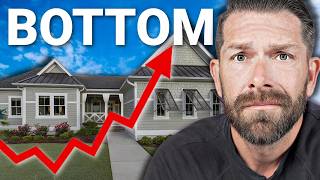
Have Mortgage Rates Bottomed for 2026? What Every Homebuyer in California Needs to Know Right Now
Over the past several weeks, something shifted in the mortgage market that caught a lot of buyers off guard. Rates that had been gradually drifting lower, flirting with the high 5s for the first time in years, reversed sharply. In less than a month, the 30-year fixed moved nearly half a percentage point to the upside. For a buyer purchasing a $750,000 home in Orange County, that is not a rounding error. That is a meaningful change to your monthly payment and your long-term purchasing power.
The question everyone is asking right now is reasonable and worth answering directly: have mortgage rates already seen their low point for 2026? If the answer is yes, what does that mean for buyers who are active in the market today? And what should you actually do about it?
This piece breaks all of it down, from the macro forces driving rates higher to what a financially responsible buyer in Southern California should be focused on right now.
Why Mortgage Rates Spiked: The Geopolitical Trigger
To understand where rates are today, you have to understand what moved them. This spike was not driven by a Federal Reserve decision. It was not a domestic economic data release. The primary catalyst was a geopolitical conflict in the Middle East that directly impacted global oil prices, Treasury yields, and ultimately the mortgage rate environment.
When conflict escalates in oil-producing regions, the ripple effects on the global economy are significant even in a country like the United States, which is largely energy independent. Oil prices affect airline fuel costs, transportation, food production and distribution, fertilizer supply chains, and a long list of goods and services that feed directly into inflation expectations. When inflation expectations rise, bond markets react. When bond markets react, Treasury yields move. When Treasury yields move, mortgage rates follow.
This is the transmission mechanism that most buyers never see, but it is the mechanism that controls the rate on your loan.
Why This One Is Different from Past Conflicts
There have been previous geopolitical disruptions that caused similar rate spikes, Russia-Ukraine being a recent example, where rates spiked and then largely recovered within four weeks as the initial shock was absorbed. That pattern created a reasonable expectation that the same round-trip could happen here.
The difference with the current conflict is that one side has a clear strategic incentive to prolong it. A prolonged conflict keeps oil prices elevated, keeps economic uncertainty elevated, and keeps the uncertainty premium embedded in mortgage rates. There is no quick resolution on the horizon. That changes the math for buyers who were hoping to wait out the spike.
The Honest Answer: Yes, Rates Have Likely Bottomed for 2026
This is not a prediction made lightly. The honest, data-driven answer is that the probability of seeing a lower rate environment in 2026 than what was available earlier this year is now quite low, especially in the near term.
Here is the reasoning. We entered 2026 with market expectations of two to three Federal Reserve rate cuts, with the first potentially arriving as early as May or June. Those expectations helped compress mortgage rates into the high 5s. The market was pricing in forward relief. That relief has now been repriced out of the equation because the inflation outlook has deteriorated due to the conflict, and the Fed has very little room to cut rates into a rising inflationary environment.
The CME futures market, which aggregates forward-looking probabilities on Fed policy, is now showing the most likely outcome for each of the next twelve Federal Reserve meetings as no change. Not a cut. No change. All the way out to late 2026 and into 2027, the highest probability scenario is not a rate decrease but in some windows, actually a rate increase.
That is a stark shift from where we started the year.
What the Numbers Actually Look Like on Rate Sheets Today
The Freddie Mac Primary Mortgage Market Survey, which is widely cited in headlines, showed roughly a 4% increase in rates over the past month since the conflict began. That survey has known limitations. It is conducted Monday and Tuesday by phone and released Thursday, meaning it is structurally slow to capture volatile mid-week moves.
On actual rate sheets, the move has been closer to 0.625% to 0.75% for well-qualified borrowers. That is the real-world number that shows up in your loan estimate. To put it differently: the rate that was available in early 2026 on a conventional 30-year fixed was just under 6%. Today, that same borrower is looking at something closer to 6.625% to 6.75% depending on loan size, credit profile, and down payment.
That gap would have to close entirely just to get back to where we started.
Every buyer's numbers are different. Down payment, income, credit profile, loan size, and the property itself all factor into what rate and what strategy actually make sense for you. If you are trying to figure out whether now is the right time to move forward, the most useful thing you can do is get clarity around your actual options.
Start here: www.theeducatedhomebuyer.com/start
What Could Change the Picture
Calling the bottom does not mean rates are going to 8%. It means that the path of least resistance is sideways to higher for the spring buying season, and that buyers waiting for a return to sub-6% rates before making a move are likely to be waiting through the most competitive months of the year.
That said, conditions can shift. There are two scenarios that could meaningfully improve the rate outlook:
- A resolution to the conflict. If a ceasefire happens, the Strait of Hormuz reopens, and oil prices begin normalizing, the uncertainty premium in mortgage rates comes out quickly. Markets are forward-looking. They would price in the improved environment before it is fully realized.
- A significant deterioration in the jobs market. Unemployment has been relatively stable, holding in the low 4s. If that number starts climbing toward 4.8% or 5%, the Fed would face pressure to cut rates and the economic slowdown narrative would dominate, which historically has been favorable for mortgage rates.
Neither of these scenarios is impossible. But neither looks likely in the next 60 to 90 days. And 60 to 90 days is the heart of the spring buying season. April, May, and June are when the most inventory comes to market, when competition is highest, and when buyers who are ready and prepared tend to win. Sitting on the sidelines waiting for a rate scenario that does not appear to be coming anytime soon is a costly strategy in a market like Orange County and Huntington Beach.
What This Means for Active Buyers in Southern California
The Southern California housing market adds another layer to this conversation. Orange County is not a market where buyers have the luxury of unlimited time. Inventory is not abundant. Well-priced homes in Huntington Beach, Costa Mesa, Newport Beach, and surrounding cities still move quickly. The buyers who hesitated earlier in the year and lost out in bidding wars at lower rates are now facing higher rates on top of the same or higher prices.
That compounding effect is real and it is painful. It is also avoidable for buyers who approach this market with a clear plan rather than a reactive posture.
The Lock Decision: Why Most Buyers Should Lock Now
One of the most consequential decisions a buyer under contract faces right now is whether to lock their interest rate. The temptation to float, meaning to leave the rate unlocked in hopes that it improves before closing, is understandable. Nobody wants to lock at a rate that could be lower in three weeks.
But here is the reality of floating in this environment. The scenario where rates improve meaningfully in the next 21 to 30 days requires a conflict resolution or an economic shock that we cannot currently see coming. The scenario where rates worsen requires nothing more than the status quo to continue. Those are asymmetric odds. For most buyers, floating is gambling on an outcome that the data does not support.
The right answer for most people, once they have a property under contract, is to lock. Not because the market is certain, but because most buyers are not equipped, financially or emotionally, to absorb meaningful rate increases between contract and close. A buyer who was comfortable at a 6.5% rate and is suddenly looking at 7% because they floated and rates moved is a buyer who may have to renegotiate, reduce their offer price, or walk away from a deal.
That is an outcome that a locked rate prevents entirely.
Points and Rate Buydowns: One of the Biggest Traps in Today's Market
When rates rise, lenders and loan officers who are not fully aligned with your interests will do one thing reliably: they will show you a rate with points to make it look like rates have not moved as much as they have. You might see an offer of 5.99% when the true zero-point market is 6.625%. The 5.99% rate sounds better. The problem is that it costs you two or more points upfront, which on a $700,000 loan is $14,000 or more added to your loan balance or paid out of pocket.
Before you compare rates from multiple lenders, make sure you are comparing apples to apples. The only honest comparison is zero points against zero points. Once you are looking at the same basis, you can make a rational decision about whether buying the rate down makes financial sense given your expected time in the home.
Almost every time this comparison is laid out clearly in front of a buyer, the zero-point option wins. Not because it has a lower payment, but because holding more equity in your home from day one is worth more than a marginal monthly payment reduction that takes years to recoup.
What Most Buyers Get Wrong About Waiting for Better Rates
The most common mistake in this market is not the wrong loan structure or the wrong down payment amount. It is the decision to pause and wait for conditions to improve before getting serious about buying.
The logic sounds reasonable on the surface. Wait for rates to drop. Wait for prices to soften. Wait for more inventory. Wait until things feel more certain. The problem is that each of those conditions is unlikely to materialize simultaneously. And in a high-demand market like Orange County or Huntington Beach, waiting typically means watching the home that was in your budget in January become the home that is out of reach in June.
The buyers who consistently build long-term wealth through real estate are not the ones who timed the market perfectly. They are the ones who bought when it was the right time in their lives, secured a payment they could sustain, and held the property long enough for equity, appreciation, and forced savings to compound in their favor.
Orange County has one of the most durable long-term appreciation stories in the country. The demand drivers, population density, employment base, coastal desirability, limited land, and constrained housing supply, do not disappear because rates are temporarily elevated. A buyer who purchases in Huntington Beach today at 6.625% and refinances in two or three years when the rate environment improves is still building substantial wealth. A buyer who waits for that refinance moment before purchasing has simply delayed the equity clock.
The Uncertainty Premium and What Happens When It Lifts
There is a concept worth understanding that is not widely discussed but is directly relevant to where rates are today. It is the uncertainty premium. When markets cannot clearly see what the economic landscape looks like six months out, they price in a premium for that uncertainty. That premium shows up in Treasury yields and flows directly into mortgage rates.
Right now, that premium is elevated. Nobody can say with confidence when the conflict ends, what inflation looks like in Q3, or what the Fed does at its next three meetings. That uncertainty has a price, and buyers are paying it today.
When the picture clears, whether through a conflict resolution, a shift in inflation data, or a deterioration in employment that triggers Fed action, that uncertainty premium comes out of rates quickly. Markets move in advance of news, not after it. Buyers who are positioned and ready when that happens, with their financing in order, their pre-approval current, and their criteria defined, are the ones who capture the best opportunities.
How to Think About Buying a Home in This Environment
Every piece of market analysis ultimately has to come back to the same question: what does this mean for you, specifically?
The answer is not the same for every buyer. It depends on your timeline, your financial stability, your down payment, your income, and your long-term objectives. But there are a few principles that apply broadly.
- If you are under contract, lock your rate. The risk of floating in this environment is not symmetric. Lock it, protect your payment, and move forward with confidence.
- If you are actively searching, keep searching. Rates being elevated does not mean the right home does not exist. It means you need to be clear-eyed about your payment at today's rates and comfortable with it before you make an offer.
- If you are on the sidelines, get your pre-approval current. When the rate environment shifts, it shifts quickly. Buyers who are prepared to act fast are the ones who benefit most from rate improvements. That preparation starts now.
- Ignore the national headlines. What is happening in the Phoenix or Nashville market is not what is happening in Huntington Beach or Irvine. Orange County has its own supply and demand dynamics, its own buyer profile, and its own price floor that is largely disconnected from national narratives about a housing slowdown.
- Work with an advisor, not a salesperson. This market requires someone who will lay out all of your options, show you the real cost of each one, and help you make a decision based on your goals. That is not what you get when you call an 800 number or respond to a Super Bowl ad. It is what you get when you work with a professional who treats your financial outcome as their responsibility.
The Bottom Line on Mortgage Rates in 2026
The low rates of early 2026 were real. They were driven by genuine market optimism about Fed cuts and a calmer global backdrop. That backdrop has changed. A geopolitical conflict has introduced inflation pressure, treasury borrowing pressure, and an uncertainty premium that will take time to resolve.
The probability of returning to sub-6% rates before the spring buying season is over is low. That is not pessimism. It is an honest read of where the markets are today and what would need to happen to change the picture.
What that means practically is this: buyers who have been waiting for the rate environment to improve before getting serious may be waiting through the best inventory window of the year. The buyers who will look back on 2026 as the year they made a smart move are the ones who built a strategy around their actual goals, found the right property, secured the right loan structure, and stopped trying to predict an outcome that no one can control.
Buy right. Borrow smart. Build wealth. That is not a slogan. It is the only strategy that holds up across every rate environment.
If you are serious about buying right and borrowing smart, the next step is not waiting for a better rate environment to appear. It is building a clear picture of what you can do now, what your options look like, and what a long-term plan actually means for your financial situation in Orange County or Huntington Beach.
The right move starts with having the right conversation. Start here: www.theeducatedhomebuyer.com/start
5 Reasons You SHOULD Buy a House (Even in This Market)

 Spotify
 Apple Podcasts
 Castro
 RSS Feed