
How The New FED Chair Will IMPACT Mortgage Interest Rates
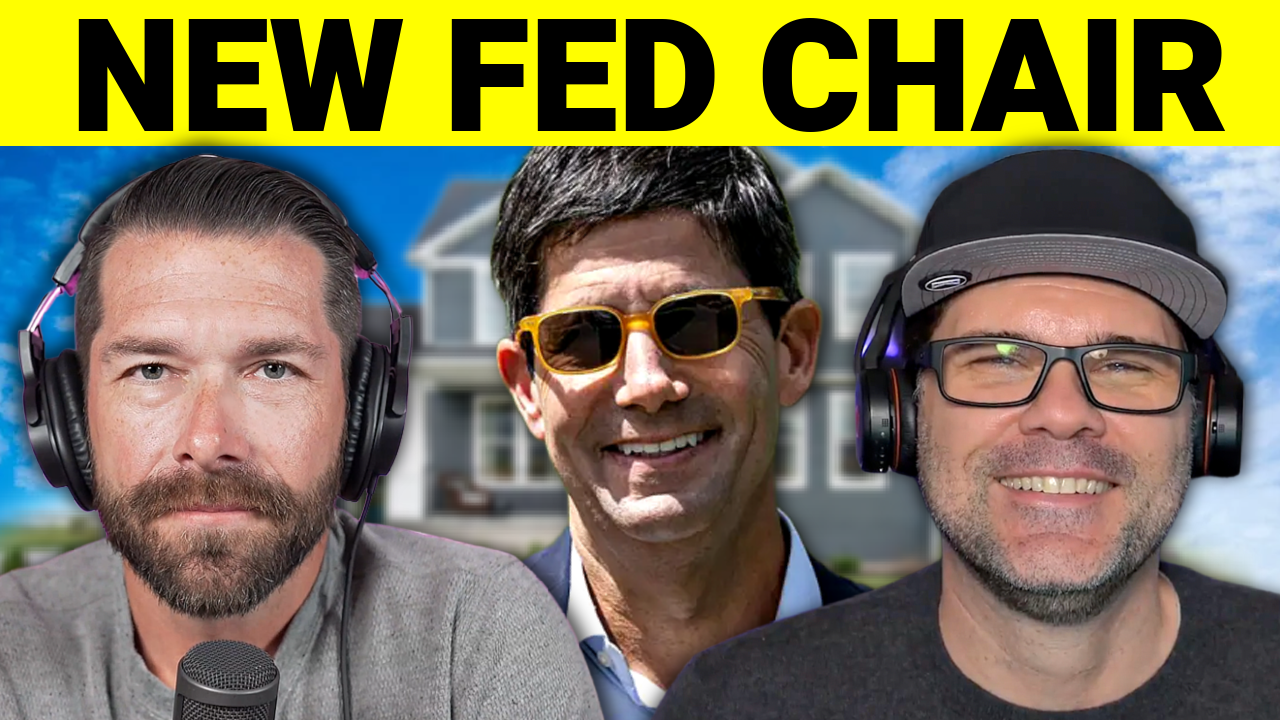
What the New Fed Chair Really Means for Mortgage Rates and Homebuyers in 2026
President Trump has nominated Kevin Warsh to replace Jerome Powell as Federal Reserve Chair. For homebuyers and homeowners across California and the country, the immediate question is simple: does this mean lower mortgage rates? The honest answer is more complicated than most headlines suggest, and understanding that complexity is exactly what separates buyers who make smart decisions from those who end up waiting indefinitely for a break that may never come.
What the Fed Chair Can and Cannot Actually Control
Before diving into Kevin Warsh specifically, it helps to clear up one of the most pervasive misconceptions in real estate and mortgage circles: the Fed Chair does not have a direct hand on interest rates. This is not a small distinction. Many buyers and even some real estate professionals believe a new Fed appointment means that person can simply dial rates up or down at will. That is not how the system works.
The Federal Reserve operates through a committee structure. There is a fixed cast of voting members and a rotating cast, and decisions are reached through consensus, not by executive command. The chair is the loudest voice in the room. They can shape forward guidance, influence how other committee members think about inflation and employment, and set the tone during press conferences that move markets. But the chair does not get to walk into a meeting and tell the other voting members what they are going to do.
What that means practically: even if Kevin Warsh walks into the job with a clear desire to move rates in a particular direction, he has to bring the rest of the committee along with him. That takes time, relationships, and data. It is not a light switch.
Who Is Kevin Warsh, and Why Does His Nomination Surprise People?
Warsh is not an outsider. He served as a Fed governor during the Global Financial Crisis and was deeply involved in the dramatic expansion of the Fed's balance sheet during that period. He was in his mid-to-late thirties at the time, unusually young for someone in that role, and he left in 2010 at around age 40.
Since leaving, Warsh has been one of the Fed's most consistent and public critics. His central argument has been that the Fed kept rates too low for too long during and after the COVID era, and more importantly, that the Fed was far too slow and far too reluctant to reduce the size of its balance sheet after expanding it aggressively during the pandemic.
Here is where the nomination becomes genuinely surprising. President Trump has spent the better part of two years publicly demanding lower interest rates. He has repeatedly criticized Jerome Powell for not moving quickly enough toward rate cuts. He has made clear that he views low rates as a tool for economic growth, affordability, and real estate value preservation. So why would he nominate someone whose core economic philosophy runs in what could be the opposite direction?
The core tension: Trump wants lower rates. Warsh has historically argued the Fed has kept rates too low and its balance sheet too large. Those two positions do not obviously point toward the same outcome for mortgage rates.
The Balance Sheet Problem Most Buyers Never Think About
This is the part of the conversation that does not get enough attention in mainstream real estate discussions, and it matters directly for anyone shopping for a home in Orange County, Huntington Beach, or anywhere in Southern California where a fraction of a percentage point in rate can mean hundreds of dollars a month in payment.
The spread between the 10-year Treasury yield and the 30-year fixed mortgage rate is not fixed. It fluctuates based on supply and demand for mortgage-backed securities. When the Fed was actively buying mortgage-backed securities during COVID, that demand compressed spreads to historic lows and kept mortgage rates artificially suppressed relative to Treasury yields. When the Fed stops buying, or worse, becomes a net seller of those securities, spreads widen and mortgage rates rise even if the underlying Treasury yield stays the same.
One of the more concrete recent examples: Fannie Mae and Freddie Mac were directed to purchase around $200 billion in mortgage-backed securities, and that single policy decision brought spreads back down to roughly 1.8%, close to the historical norm. That is a meaningful portion of why mortgage rates in early 2026 are not at 6.5% or higher. Remove that support, and rates move the other direction without the 10-year Treasury moving at all.
If Warsh comes in committed to aggressively reducing the Fed's balance sheet, as his track record suggests he might be, those spreads could widen. That would put upward pressure on mortgage rates. It would be the opposite of what Trump has said he wants and almost certainly the opposite of what most homebuyers are hoping for.
What Most Buyers Get Wrong About "Lower Rates Under a New Fed Chair"
The assumption embedded in a lot of buyer conversations right now goes something like this: Trump wants lower rates, Trump picks the new Fed chair, therefore rates are going lower soon. There are at least three problems with that logic.
First, the Fed chair does not control rates unilaterally, as discussed above. Second, Warsh's stated philosophy does not align cleanly with a near-term rate cutting agenda. Third, even if the committee were aligned and wanted to cut, the data would have to cooperate. For the Fed to move rates lower in the first half of 2026, you would need to see a clear and sustained breakdown in inflation, or a significant deterioration in the labor market. As of early 2026, neither of those conditions is in place.
The Fed funds futures market was already pricing in no changes until June well before the Warsh nomination. That expectation did not shift meaningfully after the announcement. What did shift were the dollar, gold and silver prices, and equity futures in the hours following the news, and not in a direction that signaled confidence or optimism. Markets reacted to uncertainty. That is the other important lesson: uncertainty itself is a headwind for mortgage rates. When the market does not know what the new Fed chair is going to do, how the confirmation process will play out, or whether Powell might remain on the board in some capacity after his term ends, that uncertainty tends to push rates higher, not lower.
The Confirmation Timeline and Why It Matters
Powell's appointment as chair was set to end in May 2026. The confirmation process for Warsh was not expected to be simple. The head of the Senate Finance Committee indicated he would not even begin hearings until the ongoing legal dispute involving Powell was resolved first. Even in a best-case scenario, Warsh would not be seated and actively leading the committee until the May-June timeframe.
That creates a practical reality for buyers: between now and mid-year, there is a significant amount of institutional uncertainty built into the picture. Warsh has been a critic of the very colleagues he would now be leading, which some former Fed officials noted publicly could complicate his ability to build consensus quickly.
For buyers and homeowners watching rates, the practical translation is this: do not build your financial plan around a rate drop in the first half of 2026. The conditions that would produce a meaningful improvement, sustained lower inflation readings in CPI and PCE over at least two to three months, or a sharp rise in unemployment, are not currently in evidence.
If you are trying to figure out whether this moment makes sense for your homebuying goals, the smartest first step is getting clarity around your actual numbers and options rather than waiting on a rate move that may not materialize.
Start Here →What This Means for Buyers in Orange County and Huntington Beach
Southern California buyers are operating in one of the most expensive housing markets in the country. The median home price in Orange County keeps affordability calculations extremely tight, and even a small move in mortgage rates has an outsized dollar impact on monthly payments compared to less expensive markets. That context makes the temptation to wait for better rates understandable. It also makes the cost of waiting potentially very significant.
Here is the strategic reality as it stands today. Rates are volatile but not dramatically elevated relative to the trajectory of the last two years. The spread compression that has already occurred has helped buyers relative to where rates could be. Inventory in Orange County and Huntington Beach remains constrained, and while it has been gradually increasing, it is not at a level that would produce meaningful price softening.
Waiting six months for rates to potentially improve means six months of continued exposure to a market where prices have historically trended upward, where rental costs in the meantime are not building equity, and where competing buyers who stop waiting may reduce your options. That calculus looks different for every buyer depending on their financial situation, but the assumption that waiting is automatically the conservative choice deserves scrutiny.
If you are currently in escrow, the advice that makes the most sense in this environment is to take the rate off the table. Floating a rate through a period of institutional uncertainty and political noise is not a strategy, it is a gamble. Lock when the numbers work for your situation and your long-term plan. That is not pessimism about rates, it is risk management.
The Deeper Principle: You Can Only Control What You Can Control
Every episode of market commentary eventually comes back to this: the macro environment is noise. The Fed chair, the confirmation hearings, the spread dynamics, the balance sheet debate, all of it is relevant context but none of it is something an individual buyer in Huntington Beach or Anaheim or Irvine can control.
What you can control is how well you understand your own income, assets, credit, and financial goals. You can control whether you work with a mortgage professional who gives you real information rather than false reassurance. You can control how disciplined you are about getting fully underwritten before you make offers so you can move quickly when the right home appears. You can control whether your down payment and reserves actually fit the market you are buying in.
The buyers who build wealth through real estate over time are not the ones who perfectly timed the rate cycle. They are the ones who bought right, borrowed smart, and held long enough for the fundamentals to work in their favor. That principle does not change because the Fed chair changes.
A Quick Summary of Where Things Stand
Kevin Warsh is expected to be confirmed and seated as Fed Chair around May 2026. His economic philosophy skews toward balance sheet reduction and Fed independence from political pressure, both of which cut against the narrative that his appointment is a catalyst for near-term lower mortgage rates. The Fed funds futures market is pricing in no rate changes until mid-year at the earliest, and the conditions that would force earlier action, sustained inflation decline or a significant labor market deterioration, are not currently present.
Mortgage rates in early 2026 are materially supported by the spread compression that followed the Fannie and Freddie mortgage-backed securities purchase program. That support could erode if balance sheet policy shifts under Warsh. Uncertainty around the confirmation process and the broader institutional transition is likely to keep rate volatility elevated through the first half of the year.
For buyers in Orange County, Huntington Beach, and across Southern California, the actionable takeaway is to plan for that volatility rather than betting on a direction. Get underwritten. Know your numbers. Work with professionals who give you honest assessments rather than the answer you want to hear. And when you are in escrow and the rate works, lock it.
If you are serious about buying right and borrowing smart, the next step is not guessing about where rates are going. It is building a strategy around your income, your goals, and your long-term plan.
Build Your Strategy →
Mortgage Interest Rates Have BOTTOMED For 2026
 Spotify
 Apple Podcasts
 Castro
 RSS Feed