
2026 Mortgage Interest Rate Forecast
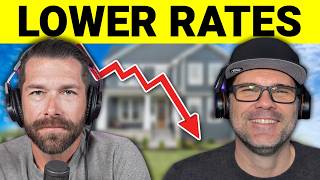
2026 Mortgage Interest Rate Forecast
If you’re buying a home in Huntington Beach, Orange County, or anywhere in coastal Southern California, you don’t need hype—you need a plan. The biggest driver of the housing market in 2026 will be mortgage rates. In this guide, we’re going to break down a realistic 2026 mortgage interest rate forecast, what actually moves rates, and how to make confident decisions as a buyer or homeowner without trying to “time the bottom.”
Quick takeaway: Expect rates to move in a range, not a straight line. There will be opportunities. The winners in 2026 will be the people who are prepared when those opportunities show up.
Watch the Full Episode
Prefer the full breakdown on video? Watch here, then come back for the expanded Orange County strategy guide.
Ready for a personalized plan (purchase or refinance)? Start here: www.theeducatedhomebuyer.com/start
Why mortgage rates matter more in Huntington Beach & Orange County
In a market like Orange County, mortgage rates don’t just influence affordability—they often determine whether a buyer can even compete. When loan sizes are larger, a small change in rate can mean a big swing in payment.
Here’s the practical math: In higher-priced areas like Huntington Beach, a 0.50% move in the interest rate can change the monthly payment by hundreds of dollars. That changes:
- Qualifying power (how much a lender will approve)
- Buyer demand (how many people are shopping at your price point)
- Competition (how many offers show up when a good home hits the market)
- Seller expectations (pricing, concessions, and willingness to negotiate)
That’s why a real 2026 mortgage interest rate forecast isn’t a “fun” topic—it’s the foundation of a smart strategy.
The #1 thing most people get wrong about mortgage rates
The biggest misconception we hear from buyers in Huntington Beach and Orange County is this: “When the Fed cuts rates, mortgage rates will drop.”
It’s understandable. The Federal Reserve dominates headlines. But mortgage rates are set by the bond market, and the bond market moves on expectations before the Fed does anything. In the last cycle, mortgage rates reached key lows ahead of Fed cuts, and then didn’t necessarily improve further after those cuts happened.
Translation: waiting for the Fed is rarely a winning strategy. The market doesn’t wait.
If your plan is “I’ll start shopping when the Fed cuts,” you’re often late to the party—especially in a high-demand coastal market.
How mortgage rates actually move (without the noise)
Mortgage rates are primarily a risk and inflation pricing mechanism. They move based on what investors demand to hold mortgage-backed securities and related bonds. The Fed influences that environment, but it doesn’t “set” your 30-year fixed rate.
What moves mortgage rates day-to-day and week-to-week?
- Inflation data (especially whether inflation is trending toward or away from the Fed’s target)
- Jobs and unemployment (a weakening labor market tends to pull rates down)
- Economic growth (strong growth can keep rates elevated; slowing growth can pressure rates lower)
- Market volatility (volatility widens the mortgage spread and can keep consumer rates higher than expected)
- Policy uncertainty (tariffs, fiscal policy, geopolitical risk—anything that moves risk sentiment)
The part most people miss: rates don’t move in straight lines
Even in a year where the trend is lower, you’ll see “head fakes”—rates improving, then giving it back, then improving again. That’s why the best approach is not predicting a single day to lock, but building a strategy that lets you act quickly when short windows open.
That preparation matters more in Orange County, because good opportunities attract buyers fast. When rates dip and payments improve, you often see demand rise and competition increase—sometimes quickly.
What happened in the last cycle and why it matters for 2026
To build a strong 2026 mortgage interest rate forecast, we start with the recent pattern: volatility, ranges, and what actually drove the moves.
Rates moved a lot even before the Fed acted
In the last cycle, there was a meaningful range between the highs and lows of mortgage rates even during periods with no Fed cuts. That’s the clearest proof that the market moves on expectations and economic data—not on the Fed’s “announcement day.”
January is often weird
One of the most consistent patterns we see is that January can be volatile and unpredictable. Bond markets come off holiday liquidity, and you can get sharp moves and corrections. That matters because buyers often make big financial decisions in January (new year, new plan), and it’s easy to assume the first move you see will continue. It often doesn’t.
The lesson for 2026
Don’t interpret one good week (or one bad week) as a trend. Build your buying plan around:
- Payment comfort (what you can handle)
- Cash strategy (down payment, reserves, closing costs)
- Timing flexibility (how quickly you can act)
- Refinance optionality (what you’ll do if rates improve)
Why “published rates” aren’t always the rates you can get
One of the most important real-world notes for buyers and homeowners: the “headline” rate you see on a website is not always what a well-qualified borrower can actually get.
If you have:
- strong credit
- solid equity (or a healthy down payment)
- clean income documentation
- the right loan structure
…you may be able to secure pricing that’s meaningfully better than the averages being published.
That’s especially true in times where lenders are competing for quality borrowers, and where certain programs (Conventional, FHA, VA) price differently depending on the scenario.
Bottom line: don’t make a major decision based on a headline number. Get a quote based on your real file.
The 10-year Treasury, the mortgage spread, and what to watch
You’ll often hear: “Mortgage rates follow the 10-year Treasury.” That’s directionally helpful, but it’s incomplete.
The spread matters (sometimes more than the 10-year)
Mortgage rates are not the 10-year Treasury. The difference between them is the mortgage spread—and that spread changes. When volatility is high, lenders price more defensively and spreads can widen. When volatility calms, spreads can normalize and rates can improve even if the 10-year doesn’t move much.
Why this matters in 2026
If 2026 brings calmer market conditions and lower volatility, we could see “free improvement” in mortgage rates from spread normalization alone—without needing a huge change in the 10-year Treasury.
One more real-world point: rates often rise fast and fall slow
This trips people up every year. When markets move against you, lenders will protect themselves quickly. When markets move in your favor, lenders often move slower to confirm that the improvement “sticks.” So if you’re waiting for a perfect day, be careful: the best days can be brief, and the “giveback” can be fast.
The consensus 2026 forecast range (and why ranges beat “one number”)
Here’s the right way to interpret forecasts: focus on ranges and probabilities, not precision.
When multiple research groups publish rate expectations, you can treat it like “wisdom of crowds.” In the transcript, the group consensus for 2026 clustered around the low 6s, with a range that roughly ran from the mid-5s to mid-6s.
Why the range matters more than the average
The average forecast might suggest rates end the year near where they began. But a year can still produce meaningful windows where rates are better (and windows where they’re worse). If you’re a buyer or refinance candidate, those windows are what matter.
That’s why we keep coming back to the same advice: don’t try to time the bottom—be ready to act when the market gives you a gift.
Our 2026 mortgage interest rate forecast
Let’s build this forecast in a way that’s useful for real people in Huntington Beach and Orange County. Not just “where will rates be,” but what should you do about it.
Base case: a range-bound year with a gentle downward bias
The most realistic base case is that 2026 is a range year:
- Rates will be higher than today at some points.
- Rates will be lower than today at other points.
- You will not be able to circle dates on a calendar and predict the exact highs and lows.
What we do believe is that the trend can be modestly lower over time if: inflation continues cooling and the job market softens.
What would push rates meaningfully lower?
Typically, you need a clear catalyst. These are the usual suspects:
- Labor market weakening (unemployment rising, job openings declining)
- Inflation trending down in a sustained way
- Reduced volatility (helping spreads normalize)
- Slower growth (reducing upward pressure on yields)
What would push rates higher?
- Inflation re-accelerates
- Growth re-heats and investors demand higher yields
- Policy shocks that increase uncertainty or inflation expectations
- Volatility spikes that widen spreads
The key threshold concept
A practical concept discussed in the episode: when rates fall below certain thresholds, housing activity improves. In other words, a modest move lower can bring more buyers back into the market—especially in places like Orange County where buyers are rate-sensitive.
That doesn’t automatically mean prices “skyrocket.” But it does often mean more competition: more showings, more offers, and less time to think when the right house comes along.
The Huntington Beach & Orange County buyer playbook for 2026
If you want to be successful buying in Huntington Beach or Orange County in 2026, here’s the mindset shift: Stop asking, “Will rates drop?” and start asking, “What will I do if rates drop?”
1) Build your “comfort payment” first
Before you shop neighborhoods, schools, or the perfect kitchen, you need a payment plan. Your comfort payment should include:
- principal & interest
- property taxes
- homeowners insurance
- HOA dues (if applicable)
- mortgage insurance (if applicable)
- any special assessments (common in some OC communities)
Orange County buyers often focus on purchase price first. That’s backwards. The mortgage market is the lever. Payment drives lifestyle. Payment drives qualification. Payment drives stress.
2) Decide your “lock rules” before you’re emotional
One of the biggest mistakes we see is buyers waiting to lock because they “feel like it’s going lower.” Here’s a better approach:
- If you’re in contract and the payment works: protect the win.
- If you need perfection to qualify: don’t float blindly—float with rules.
- If a small move would wreck your deal: don’t gamble.
In competitive micro-markets within Huntington Beach (and broader Orange County), the strongest buyers are the ones who can perform: solid approval, clean terms, clear timelines. Rate drama can sabotage that if you’re not prepared.
3) Expect “windows” not “seasons”
Many buyers assume there will be a long, obvious season of better rates. Often, the best opportunities happen like this:
- Rates dip for a short window.
- A wave of buyers re-enters the market.
- Competition rises quickly.
- Rates bounce back or stalls.
If you’re waiting for a clear announcement that “the coast is clear,” you’re usually late. That’s why preparation beats prediction.
4) Have a strategy for competition
If rates trend lower and activity improves, Orange County buyers should plan for:
- multiple offers on well-priced homes
- shorter days on market in desirable pockets
- less leverage for buyers on premium listings
You don’t win those environments with hope. You win them with clarity: what you can afford, what you’re willing to do, and how quickly you can move.
5) Don’t let rate obsession cost you the right house
Here’s a pattern we’ve watched repeatedly:
- A buyer waits for rates to drop.
- Inventory changes.
- The “right” home appears.
- They hesitate because rates aren’t perfect.
- The home sells.
If the home fits your life and your payment is sustainable, the long-term play is often: buy the house, then refinance when opportunity appears—if and when rates improve.
The refinance playbook: how to prepare for the next dip
Refinancing in 2026 may become relevant for two major groups:
- Homeowners with rates above the market who want to lower payment or shorten term.
- Recent buyers who bought when rates were higher but planned from day one to refi later.
Step 1: Know your “trigger rate”
Your trigger rate is not the same as the headline rate you see online. It’s the rate that makes sense for your scenario after you account for:
- closing costs
- time horizon
- loan size
- credit profile
- property type
Step 2: Get your paperwork ready before rates improve
The best refinance opportunities can be brief. If you wait until rates hit your target to start organizing documents, you often miss the best pricing window.
Step 3: Understand lender behavior in volatile markets
When bond markets move quickly, lenders often adjust pricing slowly on the way down and quickly on the way up. That means the best strategy is:
- be ready
- watch your trigger level
- act decisively when your numbers work
Step 4: Don’t over-optimize a refinance
Many homeowners try to capture the “perfect” bottom and end up capturing nothing. A smart refinance is one that improves your financial life with a reasonable break-even—not one that wins a guessing contest.
FAQ: 2026 mortgage rate questions we get every week
Will mortgage rates drop in 2026?
They can—but don’t expect a straight line. A realistic expectation is a range year with opportunities. The direction may be modestly lower if inflation cools and the job market softens.
Should I wait to buy in Huntington Beach until rates are under 6%?
Not automatically. If your plan depends on an exact number, you’re effectively gambling. A better strategy is: if the payment works and the home fits, buy with a refinance plan. If the payment doesn’t work, then yes—you may need either lower rates, lower prices, more down payment, or a different plan.
Do Fed rate cuts directly lower mortgage rates?
Not directly. Markets often price in expected cuts in advance. Mortgage rates react to inflation, jobs, growth, and volatility more than the Fed’s announcement day.
Why did I see rates online that don’t match my quote?
Published rates are often averages and may assume points, ideal scenarios, or specific loan types. Your rate depends on credit, down payment/equity, program, loan size, and pricing that day.
What’s the smartest “win” for 2026?
Being prepared. Buyers who know their numbers and act quickly when windows open tend to beat buyers who wait for certainty.
Start here: get your custom plan
If you want a strategy built around your goals—buying in Huntington Beach, Orange County, or anywhere in Southern California— the fastest way to get clarity is to start with a simple intake and we’ll map your best path.
Start here: www.theeducatedhomebuyer.com/start
Whether your next move is buying now, waiting with purpose, or preparing for a refinance window, the goal is the same: make an informed decision and avoid letting headlines run your finances.

Mortgage Interest Rates Have BOTTOMED For 2026

 Spotify
 Apple Podcasts
 Castro
 RSS Feed